Testing Kalshi Bot Logic Against Full Order-Lifecycle State Transitions Without Touching Live Markets
Stateful simulator preserves order and market transitions for bot testing without live execution.
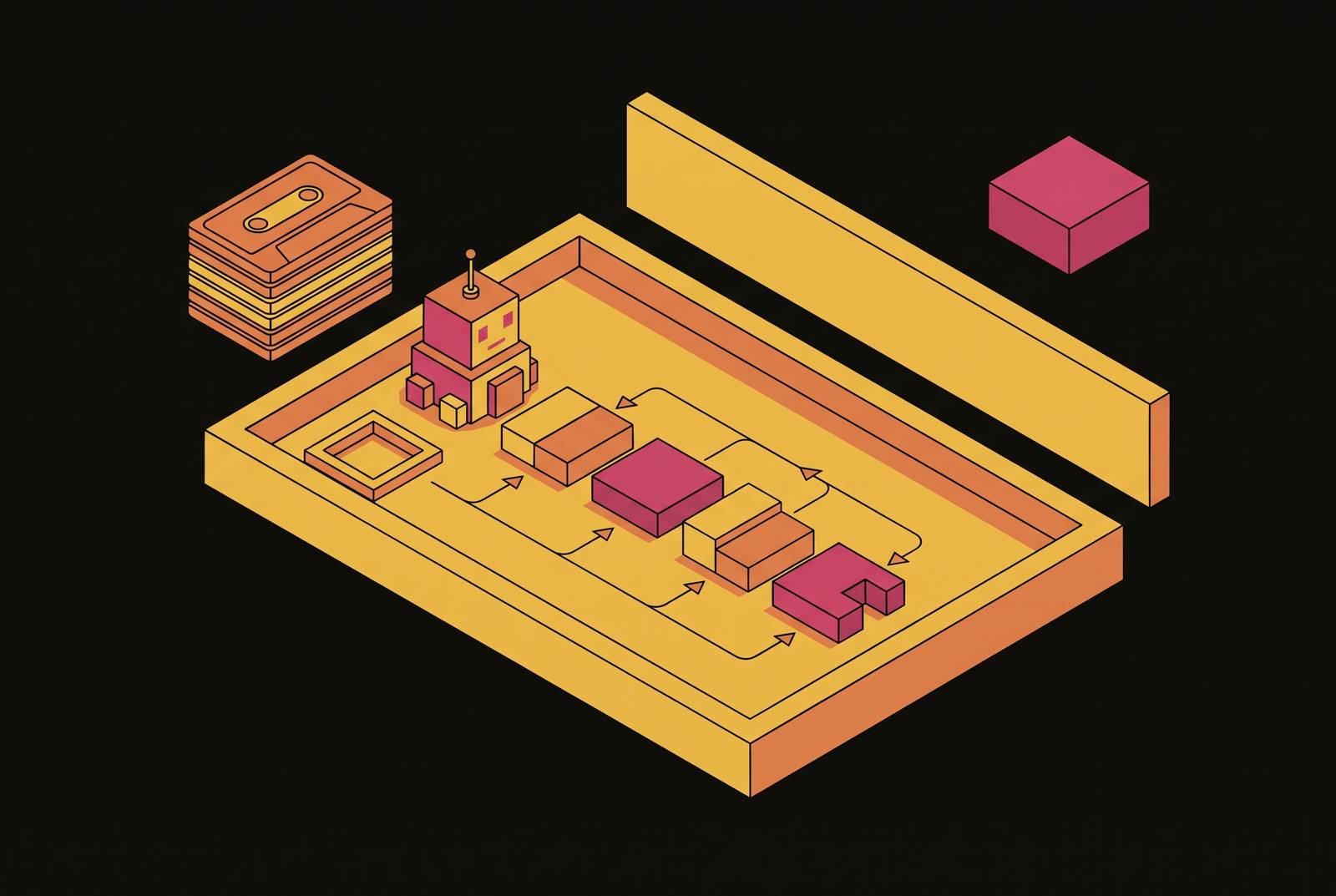
Integration testing against stateful APIs requires a simulator that preserves the effects of earlier calls and events, so tests can validate sequences. For Kalshi bots, that means exercising the full market and order transition graph without touching live markets. Tests that cover the lifecycle well need cumulative state, REST and WebSocket behavior that stays in step, and faults that the test can control.
Why Kalshi bot logic depends on cumulative order and market state
A bot can work perfectly while a market is active and fail as soon as trading closes or a result is disputed. Its order dispatch, position tracking, and settlement logic depend on what happened before the current request. The request alone is not the unit of correctness. Kalshi bot logic is a state machine whose behavior must remain valid as both the market and its orders change.
Kalshi's market lifecycle documentation defines eight statuses, namely initialized, active, inactive, closed, determined, disputed, amended, and finalized. The REST API distinguishes resting, canceled, and executed, while FIX additionally distinguishes Partially Filled, Filled, and Expired. Tests must preserve those interface-specific representations rather than treat every unfilled order or every non-active market as equivalent.
Time also changes which operations are permitted. Once close_time passes, order operations, including cancellations, are rejected with MARKET_INACTIVE, and resting orders are canceled shortly afterward with updates on user channels. Yet the implicit initialized → active and active → closed transitions emit no WebSocket event. A bot that relies only on explicit notifications cannot correctly follow the lifecycle.
What the full transition graph looks like and where bots typically break
The direct market path runs initialized → active → closed → determined → finalized. The graph also branches through pauses, reopening, and disputes. From active, exchange deactivation leads to inactive and emits deactivated. A bot that does not subscribe to market_lifecycle_v2 misses that notification. The reverse edge, inactive → active, cancels all resting orders on reactivation, so resuming trading requires reconsidering the bot's order-book assumptions.
A closed market can reopen into active after close_time is pushed into the future, with close_date_updated followed by activated. A bot using a cached closing time can therefore remain stopped when orders are permitted again. After determination, the path can instead run determined → disputed → amended. The settlement timer restarts at amended, changing when a held position can be expected to settle.
Order transitions intersect these market branches. The resting → partially_filled → filled path exposes a position before the intended order is fully executed. Along the resting → expired path, the bot must consume the exchange's cancellation update rather than attempt its own cancellation after the deadline.
Why a stateless mock cannot represent these transitions
A stateless mock returns the same payload for the same request regardless of earlier activity. That makes it structurally unsuitable for testing cumulative behavior. In a resting-to-filled test, GET /portfolio/orders/{id} must return the resting order before execution and its filled state afterward, using the appropriate interface representation. Changing a response by hand also does not establish that the preceding action caused it.
The same limitation applies across REST and streaming events. An active → inactive → active sequence must change market state and leave resting orders canceled after reactivation. Later reads and notifications must show the same effects. A mock without memory supplies only separate answers that the test author has arranged.
Retries also need memory, even when the market state stays the same. Kalshi's create-order documentation recommends, but does not require, an idempotency key. Testing that behavior requires remembering the original submission so a duplicate key reuses the original order and returns its response. Static responses also drift as the API changes. That is a separate verification problem, but memory is the first requirement they fail.
What a stateful simulator must track to cover the full lifecycle
A simulator must keep a shared world model from one call to the next. Its market controls let tests advance initialized → active, pause and reactivate trading, and proceed through closure, determination, and finalization. Its order state evolves from the bot's actions and simulated exchange events. Placing an order creates a resting order, matching advances execution, and passage beyond close_time triggers expiry and cancellation notifications. The test author does not configure each resulting response separately.
REST and WebSocket views must show the same changes. Lifecycle notifications belong on market_lifecycle_v2, with multivariate_market_lifecycle covering MVE markets, while order events appear on user_orders. For bots using order groups, the simulator must also emit the appropriate order_group_updates sequence, including created, triggered, reset, deleted, and limit_updated. Stream support is not an optional attachment to endpoint coverage.
The simulated book also needs realistic initial conditions. Standing orders, competing participants, and a realistic price distribution make partial fills, price crossing, and post-only cancellations testable. An empty world cannot expose those interactions. Fault controls must also let tests trigger MARKET_INACTIVE, ambiguous EXCHANGE_UNAVAILABLE rejects, 429 responses with Retry-After, and WebSocket disconnects when needed. Together, these capabilities let a test control both the state reached and the disturbance applied there.
How to write integration tests where lifecycle order of operations matters
A practical suite groups tests by transition. Each case establishes a market and order state, runs the bot from that point, and asserts the resulting state. Begin at initialized, where the bot must subscribe to lifecycle updates but refrain from placing orders. Advance through initialized → active without an activated event. This verifies that the bot handles the implicit opening transition in the absence of a notification.
During active trading, place an order, produce a partial fill, and validate management of the resulting position. Introduce active → inactive while activity is underway and check that dispatch stops without corrupting held state. Test idempotency in this phase as well. A duplicate key must return the original order response, while a fresh key creates a new order. Stream-handler cases should also verify that state processing remains separate from dispatch, so malformed or duplicated messages do not trigger orders.
Next, drive active → closed and assert both rejection handling and consumption of resting-order cancellation updates. Continue through closed → determined → disputed → amended, checking that the bot retains its position and revises its settlement expectation when the timer restarts. At determined/amended → finalized, require recognition of settled and reconciliation against the post-settlement portfolio through REST. Run each group alone and in sequence. Isolation exposes initialization errors, while sequential execution exposes dependencies left by earlier transitions.
Injecting faults at the right lifecycle stages
Inject faults at the transition the test needs to check. A MARKET_INACTIVE response placed arbitrarily in active trading does not validate the closing boundary. The relevant case is a cancellation reaching the exchange milliseconds after close_time. The bot must handle the rejection without crashing and still process the exchange's cancellation update. The stage determines what recovery should mean.
During active trading, inject a 429 response mid-burst and verify that the bot respects Retry-After without discarding strategy state. A WebSocket disconnect at that stage tests a different recovery path. The bot must reconnect, resubscribe, and use REST to rebuild any order state it is unsure of before it acts. During the settlement timer window, inject a timeout instead. The bot must not promote determined to finalized merely because time has passed, but must poll or await settled.
Kalshi's changelog defines EXCHANGE_UNAVAILABLE, as of June 4, 2026, as a gateway failure to confirm whether an order was applied. The simulator should return that reject on submission, then expose the order as filled on a subsequent order lookup. The bot must query state before retrying. Treating the reject as proof that nothing happened would make duplicate submission possible.
Testing LLM-driven bots that call Kalshi's API as a tool
An LLM-driven bot uses the same lifecycle but can also fail in how it uses tools. It may choose the correct endpoint with malformed parameters, misread a lifecycle notification, or keep attempting an operation after the market closes. The same simulator requirement therefore becomes more demanding. Each lifecycle case must validate endpoint selection, parameter extraction from current market state, and response parsing that updates the agent's world model.
Ambiguous submission is especially important in that evaluation. An agent must not convert uncertainty about whether an order was applied into an assumption that it filled. A deterministic EXCHANGE_UNAVAILABLE scenario makes that reasoning test repeatable in CI. The assertion concerns both the next tool call and the state the agent believes it holds.
Tests must run for more than one turn to catch mistakes that keep happening. After close_time, an agent may repeatedly attempt cancellation, receive MARKET_INACTIVE, and try again without a termination condition. The simulator must track turn count so tests can assert a maximum retry depth. RL training extends the same requirement to thousands of episodes with deterministic replay. Resetting to specified market and order states allows those episodes to run without live-market interference, credential exposure, or exchange rate limits.
How simulator drift against the live Kalshi API undermines test validity
A simulator can maintain an internally consistent world while teaching the bot behavior the API no longer supports. Passing tests then hide the divergence until deployment. Verification must therefore check response shapes, what fields mean, and how transitions work, as well as whether the simulator still runs.
Kalshi's changelog gives a concrete example in its October 29, 2026 change to GET /portfolio/orders. The event_ticker parameter accepts up to 100 comma-separated tickers, up from 10, and filtering on events with no markets now returns no orders, having previously returned all orders. A simulator retaining the earlier behavior would validate different filtering semantics. An empty result could consequently mean something different to the tested bot than to its deployed version.
The same changelog records October 29, 2026 support for Margin market deactivation and activation on market_lifecycle_v2. A simulator's stream model must track such changes as well. Before every simulator release, verification should run the relevant suite against both the simulator and live endpoints, with behavioral divergence failing the build. Tools such as oasdiff and Pact provide contract-testing scaffolding, but schema comparison cannot replace endpoint verification because schemas can also lag behavior.
That verification is separate from day-to-day bot testing. The simulator can run locally or in CI without live credentials, including in offline, air-gapped environments. To check compatibility, the simulator still needs to be compared with how the live API behaves.
A practical starting point for wiring the simulator into a Kalshi bot project
A project can establish lifecycle coverage from its first development stage. Point the bot's REST client and WebSocket connection at the locally hosted simulator, without changing live credentials or signing live requests. Run initialized → active and resting → filled cases first to validate dispatch and state reconciliation. Then add active → closed, MARKET_INACTIVE handling, and resting-order expiry notifications before connecting to any live environment.
Fault cases belong in a dedicated CI stage. Run ambiguous EXCHANGE_UNAVAILABLE rejects, 429 responses with Retry-After, and disconnect-and-reconnect scenarios on every pull request. Add closed → determined → disputed → amended → finalized as the final integration stage. This completes the lifecycle traversal before capital is at risk. Checking the simulator on an ongoing basis keeps that suite in step with how the exchange behaves, without the need to change mock responses by hand after every protocol change.
The Kalshi demo environment still has a defined role. It is the place to verify RSA request signing, WebSocket reconnection logic, and exponential-backoff retry paths against the service environment. Those checks establish that the connection machinery works. The stateful simulator establishes whether the strategy behaves correctly as market and order history accumulates.