Stateful Kalshi API Simulation for Local Bot Development
Build order lifecycle tests locally by simulating state changes and failures.
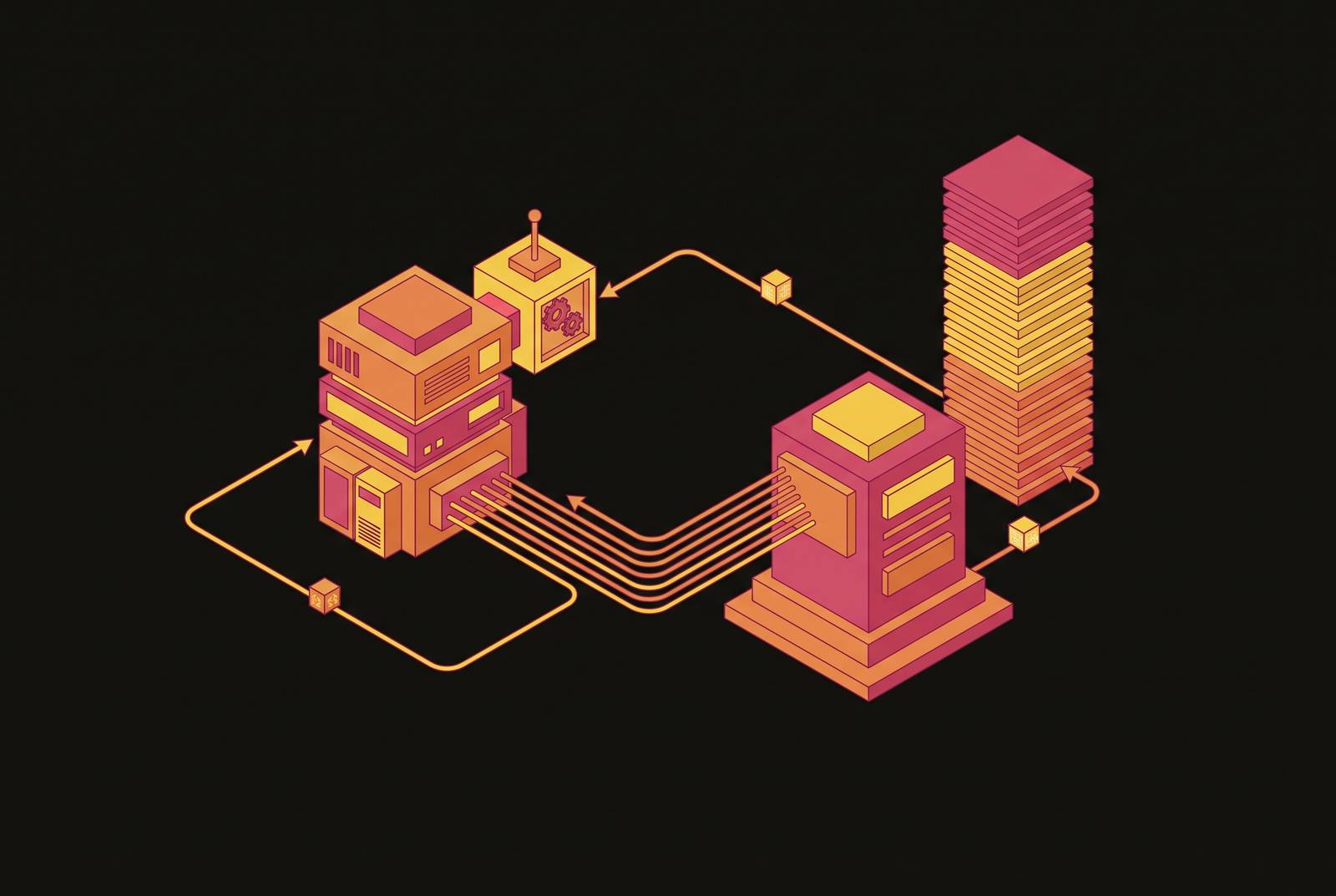
Integration testing against stateful APIs needs a local simulator that remembers earlier calls, lets tests control state transitions, and injects failures without touching production. For Kalshi bot development, that means testing order lifecycle sequencing, WebSocket recovery, and historical cutoff handling as connected sequences. Stateful simulation tests whether the bot handles those sequences correctly, while historical data replay tests a different property, namely strategy performance.
Why the Kalshi demo environment is not enough for bot development
Kalshi’s documentation says that demo credentials are separate from production credentials, demo funds are mock funds, and demo market prices and behavior may differ from those in real markets. The environment exposes REST and WebSocket endpoints, making it useful for checking RSA-PSS signing, base-URL configuration, and basic order submission. Those checks establish that the bot can communicate with an API. They do not establish that it can recover when the state behind that API changes between requests.
The distinction is control over the conditions being tested. The demo does not let developers force order lifecycle transitions, set market state, or inject network-layer failures when they need them. Even configuration checks have limits when one endpoint uses the wrong base URL while the rest of the bot is configured correctly. A request’s acceptance or rejection does not by itself isolate the misconfigured path. The demo therefore serves as a plumbing check.
The three stateful failure modes a Kalshi bot will hit in production
A bot places a limit order, polls its status, receives “filled”, and then attempts to cancel it. The cancel must fail because the order has already filled. Kalshi’s REST cancel endpoint does not document a 409 response for this case, while its FIX API returns an OrderCancelReject with reason 'Too late to cancel'. The bot must handle that rejection correctly.
A stale WebSocket order book creates a more dangerous failure because the bot can continue trading without recognizing that its prices are wrong. Kalshi’s order book API sends an orderbook_snapshot after subscription to orderbook_delta, followed by deltas that must be applied in order. If the connection drops, applying new deltas to the old local book can corrupt the bot’s view of the market. Recovery requires sequence-number tracking to detect gaps, a running local book, and a fresh snapshot before delta processing resumes. A bot that halts has stopped trading, but one that silently uses a stale book can produce wrong fills.
Past the historical boundary for the query, live endpoints return HTTP 200 with an empty array and no error code. A backtest loop that treats transport success as data availability can silently train on nothing. The defensive pattern is to call the historical cutoff endpoint first and gate historical queries against the confirmed boundary before training begins. Testing this path requires control over the boundary and the response for a specific time range.
Why stateless mocks cannot reproduce any of these three paths
A stateless mock maps a request pattern to a fixed response without remembering earlier requests. It can return a filled-order fixture and a cancel-error fixture, but neither response follows from an order actually changing state. Hard-coding responses based on how many calls have been made gives the test one expected path to follow. It does not establish that an unexpected sequence will receive a response consistent with the order’s current state.
The same limitation applies to snapshots and deltas. A mock can supply both fixtures, but without a running order book it cannot model the relationship between missed updates, reconnection, and the authoritative book. An empty-array fixture is similarly narrow. It tests one response but cannot enforce a configurable cutoff for every query that crosses the boundary.
These fixtures remain useful for checking how code handles individual response shapes. Their limitation is causal, because one call does not change what the next call means. They also require manual maintenance when the real API changes. A passing fixture test can therefore confirm agreement with an outdated stub that differs from the service the bot will use.
What a stateful Kalshi simulator must actually do
A stateful simulator needs a running world model in which orders, market data, and historical boundaries affect later responses. Creating an order must assign an ID and retain its state so that subsequent reads and cancellation attempts refer to the same object. Tests must be able to advance that order to filled and exercise cancellation rejection. A configured 409 can test a conflict-handling branch, but it must not be presented as Kalshi’s documented REST response for a filled-order cancellation. Fidelity requires preserving that distinction.
For WebSocket testing, the simulator must maintain an order book, emit a snapshot on subscription, and stream deltas as orders change. It must also allow a controlled disconnection so that recovery can be reproduced. Historical testing requires a configurable cutoff that consistently produces HTTP 200 with an empty array for requests on the empty-result side of that boundary.
On-demand 429s, 503s, and latency allow tests to exercise exponential backoff and retries, which Kalshi’s Developer Agreement explicitly requires. Running these tests locally without live credentials or rate limits keeps them away from production, but whether they can run fully offline needs a separate check. Rystic builds local stateful simulators in which each call sees earlier calls, and it compares simulator behavior with the live API before every release.
How to structure a local test suite around each failure mode
Each failure mode needs a separate, reproducible case with assertions about the bot’s behavior. For the order lifecycle case, create an order and assert that its returned ID is non-null and that the order is active. Use the simulator’s state-control mechanism to advance its stored order to filled, then retrieve the same ID and assert that its status is filled. Attempt cancellation and assert that the bot handles the rejection and retains the order’s filled status. If the case uses a configured 409 conflict body, keep that fixture choice distinct from the production REST contract.
For the WebSocket case, connect, receive an orderbook_snapshot, and apply several deltas while checking the bot’s local book. Trigger a disconnection from the simulator side, then allow the bot to reconnect. Assert that the bot obtains a fresh snapshot before resuming delta application. After resynchronization, compare its local book with the simulator’s current authoritative state. The simulator supplies the disruption and reference state, but the test passes or fails on the bot’s recovery.
For the historical case, configure a known cutoff and query a range expected to contain valid market data. Then query a range configured to fall beyond the live endpoint’s available history and assert HTTP 200 with an empty array. The test must assert that the backtest loop stops on that empty result and exercise the cutoff check that gates queries before training starts. Testing only the response body would miss the behavior that prevents silent training on nothing.
Fault injection extends these cases to the retry paths around them. Configure 429 responses for the next N requests to the order endpoint and assert that the bot applies exponential backoff and retries. Then configure a 503 during the WebSocket upgrade and assert that the reconnection loop engages. In a local environment such as Rystic, stateful request handling provides the basis for these connected tests. The test still needs explicit control over the relevant state and faults.
Fitting stateful simulation into a Kalshi CI/CD pipeline
The simulator should start as a sidecar scoped to the CI job, with state isolated to that job. Set its base URL through a job-specific environment variable rather than a global configuration that someone must remember to switch. Run the suite only when the simulator is healthy, and fail the job at once if startup fails. Silent fallback to a live endpoint defeats the purpose of the test, even if the build reports success.
Pre-seed realistic data before each run so that exercising stateful paths does not depend on manual setup. Rystic’s pre-seeded data gives tests a world that already has data in it, without a custom data-loading step. The suite requires the ability to change state, inject faults, or run fully offline, and those requirements must still be matched to the capabilities available in the selected plan. Keeping live credentials and API rate limits out of the local loop makes frequent integration testing practical without production access.
Testing a Kalshi bot that uses an LLM to interpret market conditions
An LLM-driven bot adds a gap between describing an action correctly and executing it correctly. An agent may identify “buy YES contracts on the inflation market” as its intended action but send a request with a missing or wrong-typed field. The API can reject that request with a 400 even when the accompanying explanation sounds coherent. Evaluation must therefore inspect actual tool calls and their consequences.
Request validation alone can expose the malformed field, but stateful evaluation is needed to test what happens next. A successful buy must be visible to the subsequent portfolio query, while a failed order must not appear in the position list. The workflow can then continue through interpreting the market, placing the order, confirming its fill, and deciding on a follow-up action.
The same rules for local simulation apply whether rules or a language model choose the action. Rystic provides stateful environments that can be reset and manipulated, which makes the approach relevant to tool-use evaluation. That capability does not by itself establish determinism or horizontal scalability across containers. Tests at scale still need both of those properties. Immediate integration testing focuses more narrowly on whether the agent’s calls produce and correctly interpret the expected changes in Kalshi-shaped state.
The honest limits of local stateful simulation for Kalshi bots
Local stateful simulation validates integration mechanics and edge-case sequencing. Its synthetic order book can mimic realistic depth and bid-ask spreads without reproducing live liquidity, participant behavior, or price dynamics. Passing lifecycle, reconnection, and cutoff tests provides evidence that the tested mechanics work. It does not prove that a strategy is profitable or that the bot handles genuine market microstructure correctly.
There is also a boundary between the documented API contract and undocumented internal business logic. A local simulator models the former and the state transitions it exposes, but it cannot stand in for every vendor-specific rule that the specification does not describe. Even the contract that the simulator models needs to be checked against the real service regularly. Without those checks, a test suite can agree with itself while testing the wrong behavior.
Rystic addresses that drift risk by running the same requests against the live API and simulator before release, with fidelity measurements published from CI per commit. Those measurements make agreement something to assess rather than assume. They do not turn synthetic markets into live ones or remove the need to understand the tested contract. The practical approach remains two-layered, with local stateful simulation for integration mechanics and historical data replay for strategy validation. For APIs where order of operations matters, the simulator’s job is to make those operations and their consequences testable safely and repeatably.